
Sep
What are feminized marijuana seeds
Female Weed Plant: All You Need to Know About It
The female weed plant is always the rave; this is because it’s the one that produces the marijuana buds which we all love. So, if you are unsure how to tell the female from the male, we shall guide you. There’s a lot to learn about the female weed plant. Let’s dive in and learn something new!
Strains of Cannabis Plants
Cannabis has four strains which include the following;
a) Indica
During the flowering phase, cannabis plants with an indica inclination produce dense, fat, hefty buds. As a result, these strains are frequently thought to provide users with a “body high” rather than a more cerebral high.
b) Sativa
Compared to indica strains, sativa strains typically yield more airy and well-formed buds. Cannabis users have a reputation for experiencing more cerebral, energizing, and “buzzy” highs from sativa strains.
c) Hybrid
Hybrid strains, which include sativa and indica, are typically thought to provide a more even high.
d) Hemp
Although hemp plants are related to the cannabis family, they differ from typical weed plants because they produce very little THC, the chemical that gives marijuana its high.
How to Identify a Female Cannabis Plant
Cannabis cultivators seek female marijuana plants mostly. This is because they contain the bud that comprises most weed products.
Female plants also contain a good amount of tetrahydrocannabinol (THC), the main psychoactive compound in cannabis; however, male plants contain only a small amount of THC.
Image Source: maximumyield.com
If you are a marijuana farmer and want more female plants, you can feminize them. You can learn how to feminize marijuana seeds and do it yourself if you are not willing to buy feminized ones.
Cannabis is an annual flowering plant. This means they complete their life cycle from germination to seed production in a year.
The early female cannabis pre-flowers are ovate, pear-like, and have a long and slender pointed tips. That is the calyx from whose tips a pair of pistils extend.
Female cannabis plants start to show sex with small pre-flowers from about 4-6 weeks. By week six, you can tell the difference between female and male cannabis plants.
Female marijuana plants can sprout from photoperiodic, automatic, or feminized seeds. Pre-flowers in females look like a pair of white hairs from the round calyx.
Parts of the Cannabis Plants
Mostly, people only know about two parts of the cannabis plant. These parts are the buds/flowers and the iconic leaves, which are the most important parts of the plant.
However, the plant has other botanical elements. Let’s look at them briefly;
a) Seeds
Image Source: Hightimes.com
Cannabis plants begin from seeds, and their life cycle ends once they produce mature seeds. So, these are at the beginning and end of the plant’s life cycle.
Cannabis plants grown directly from seeds are stronger, produce a higher yield, grow faster, and even have better quality plants than clones.
The seeds form in female plants; once pollinated, they take 45 days to fully mature.
b) Roots
The roots are essential to the cannabis plant as they nourish the plant and keep it stable. The upper part of the root system is known as the root clown, where tissue begins to form the stem.
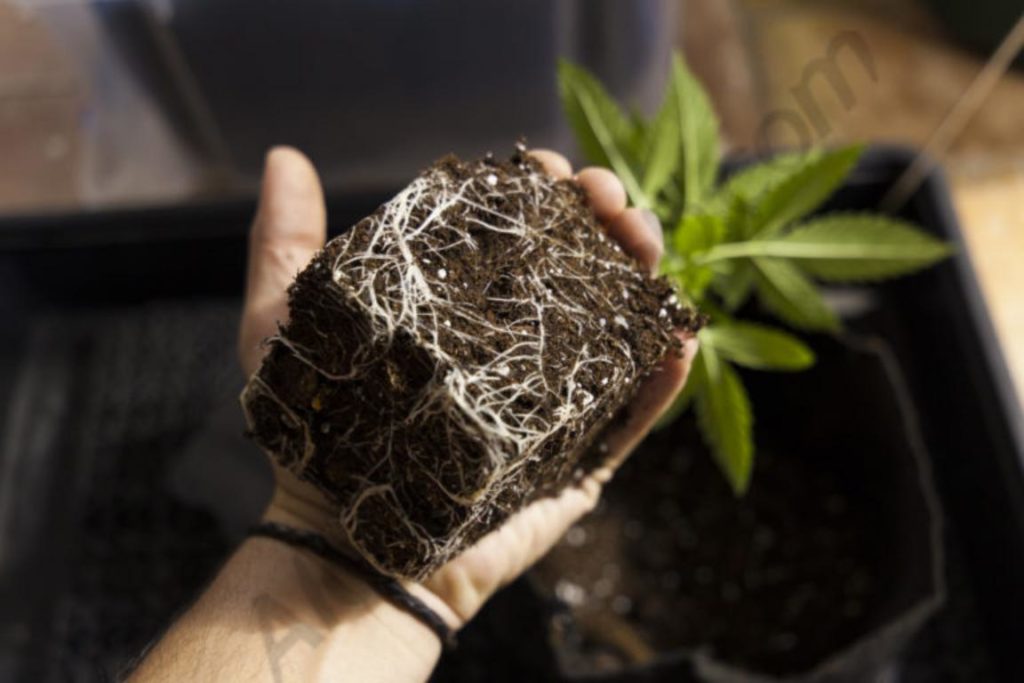
Image Source: Alchimia.com
Changes in the vascular system make these roots tougher, stronger, and larger. This is also a result of absorbing air and oxygen.
c) Stem
The stem connects the other plant parts with the roots. It also gives the plant structure and stability as it grows and becomes more elongated.
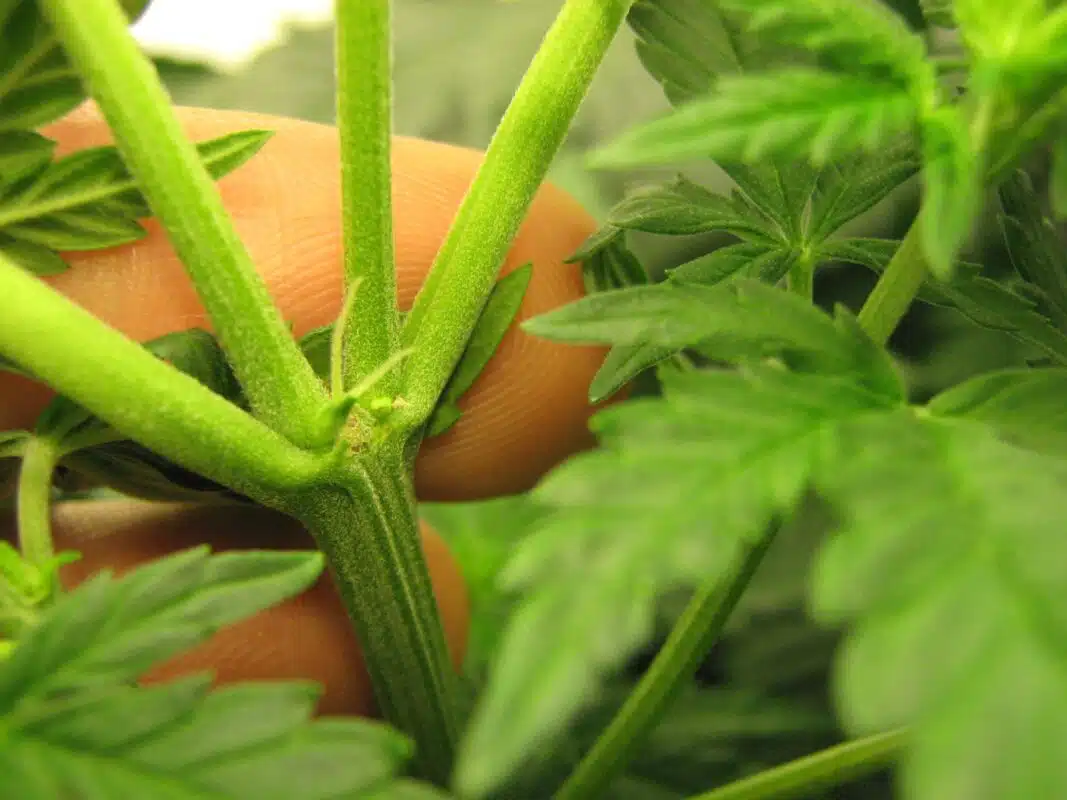
d) Nodes and Internodes
Nodes are where the branches extend from the stem and other branches, while internodes are the spaces you see between individual nodes.
Image Source: Maximumyield.com
Indica-dominant plants have narrower nodes, while sativa-dominant ones have larger internodes.
e) Stipule
Stipules form at the nodes in pairs and look like tiny, thin leaves; you can often mistake them for pistils.
f) Branches
Branches work with the stem to form the whole structure of the cannabis plant. They are covered in leaves and form a canopy, and the plants will have more or less branching later, depending on their genetics.
g) Leaves
The most recognizable features of the cannabis plant are its distinctive serrated leaves. Their primary job is to store sugar and produce other plant food through photosynthesis.
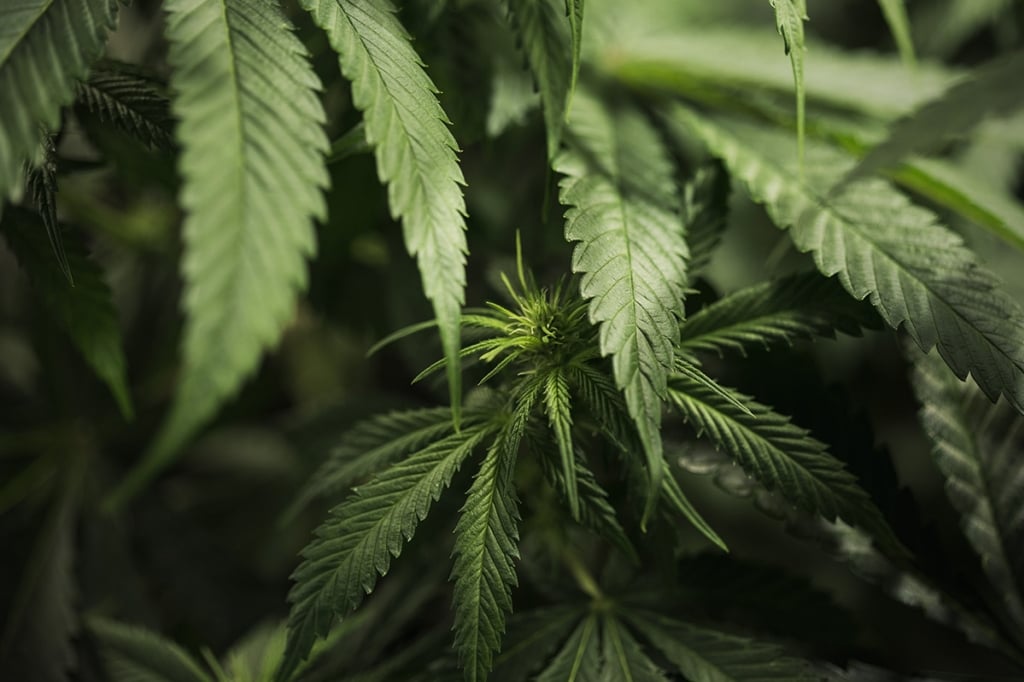
Image Source: Royalqueenseeds.com
The leaves of this plant are divided into finger-like lobes extending from the base of the leaf.
i) Sativa

Image Source: ncsu.edu
In contrast to indica leaves, which are bigger, darker, fatter, and often have fewer blades, sativa leaves are lighter and thinner and tend to have more leaves or fingers. But, again, this is merely a genetic manifestation of the two strains.
ii) Fan Leaves
The largest section of the cannabis plant is often its fan leaves. In contrast to sugar leaves, they do not have as many trichomes or cannabinoids, or terpenes. Fan leaves, however, are a crucial component of any cannabis plant.
Image Source: herb.com
These leaves indicate the plant’s health as diseases always show up first on them. The leaves also store water and other nutrients.
iii) Sugar Leaves
Sugar leaves grow from cannabis flowers and get their name from trichome glands. They contain a higher concentration of cannabinoids and terpenes.

Image Source: 420magazine.com
Their function is the same as that of other leaves. However, they are thinner, have fewer blades, and are shaped like a spear.
h) Pre-Sexual Structures
Pre-sexual structures, often known as “pre-flowers,” start forming as the cannabis plant ages and gets closer to flowering.
i) Flowers/Buds
Most people grow cannabis plants for their flowers or “buds,” which are the sections of the plant that contain the most cannabinoids. Their primary job is to gather pollen and make seeds.
Image Source: cannabistraininguniversity.com
The majority of growers wish to prevent this. The quality of the blossoms would be ruined by pollination, which would redirect the plants’ energy toward creating seeds.
j) Bracts
Bracts are tiny, modified leaves that resemble teardrops that, along with bracteoles, envelop and guard the seed pod. They appear just before blossoming and are found at the flower’s base.
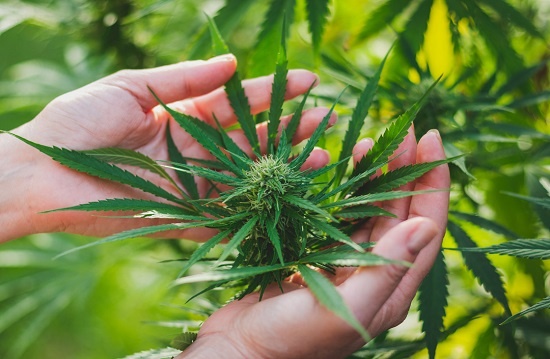
Image Source: ubaked.com
The bracts transform into an early form of the ovary or a seed incubator once the female plant is pollinated. They safeguard the seeds while they develop, ripen, and eventually separate.
k) Calyx

Image Source: icmag.com
A female marijuana plant has calyx cells, but it is not well-defined. Calyx cells are a section of the perianth, a layer of delicate tissue that partially covers the ovule.
l) Pistils and Stigmas
The female sex organs of the plant are stigmas and pistils. The stigmas are two hair-like structures that grow at the tip of the pistils, which are oval formations with only one ovule covered by bracteoles and bracts. The stigmas catch pollen during pollination.
m) Cola
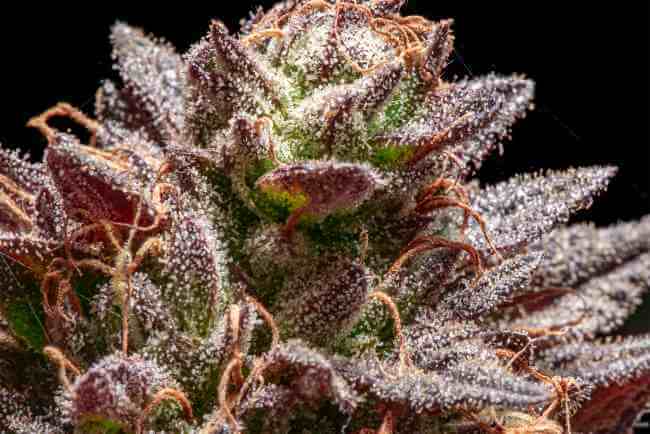
Image Source: Wikileaf.com
The full bloom on the main stalk, or “cola,” is the plant’s main bud. Cola is a collection of several floral shapes gathered together and is the plant’s biggest and heaviest flower of the cannabis plant.
n) Trichomes
Trichomes, which resemble tiny crystals and are little resin glands in the form of mushrooms, coat the buds and sugar leaves. Although the buds have most trichomes, the stems, branches, and leaves also have them.
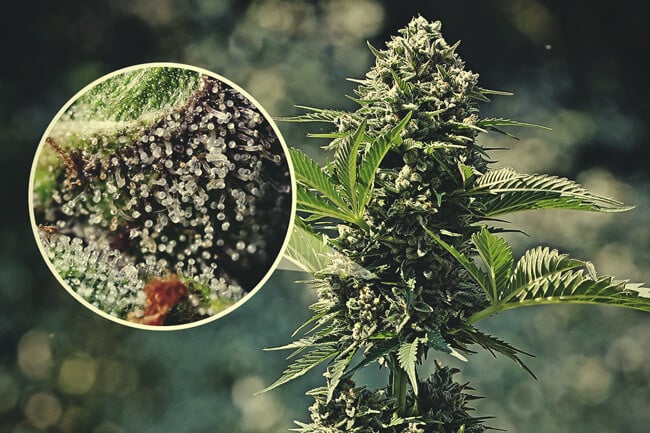
Image Source: royalqueenseed.com
Trichomes are present in both female and male cannabis plants. They create the plant’s phytochemicals, including flavonoids, terpenes, and cannabinoids.
Hermaphrodite Cannabis Plants
Hermaphrodite cannabis plants occasionally grow with others. Plants that are hermaphrodites develop both male and female reproductive parts.
Cannabis plants that have both sexes develop due to genetics. However, this is less common than when a plant is stressed. Some stressors leading to hermaphrodite plants include excess heat, root rot, and malnutrition.

Image Source: 420magazine.com
True hermaphrodite and mixed-gender hermaphrodite marijuana plants are the two varieties. Cannabis plants that are true hermaphrodites produce male and female sex parts but on distinct parts of the plant.
Cannabis plants with mixed genders produce anthers, yellow sex organs that develop from female flowers. Anthers release pollen, which fertilizes adjacent flowers.
Hermaphrodite plants discharge pollen. So, if you want your female plants to stay seedless, you should rapidly remove the hermaphrodite plant from the vicinity. However, if you want to have both sexes, you can get the male and female marijuana seeds and plant them.
Using a hermaphrodite plant to pollinate your female plants is usually not a good idea, even if you want them to produce seeds. However, if you do, there’s a good chance you’ll get hermaphrodite seeds.
How to Differentiate Male and Female Plants
When the cannabis plant is around six weeks old, you can see the difference between male and female plants. Look at the nodes where the plant’s leaves, branches, and main stem meet to determine the sex of the marijuana plant.
Image Source: futureharvest.com
Male weed plants will generate pollen sacs, which at first resemble little balls before expanding into larger clusters of oblong-shaped sacs. On the other hand, a female weed plant will generate pistils, which first resemble thin hairs before developing into more definite ovules and stigmas.
It is important to distinguish between female and male marijuana plants because only female plants produce flowers. However, male plants only produce pollen sacs, so they don’t produce any buds you can harvest for consumption.
Frequently Asked Questions on Female Weed Plants
1. Can you grow male and female marijuana plants together?
Male and female weed plants shouldn’t be grown together, even if they can technically coexist. If you want to harvest buds from your female cannabis plants, separate the male and female plants.
Male cannabis plants aren’t useless, though; they contribute significantly to a grower’s harvest but growing them separately allows the female ones to grow well and develop.
2. Is it possible to tell if a marijuana plant is male or female before it flowers?
The first and most noticeable indicator is the presence of both male and female buds on the same plant. The presence of anthers, which growers refer to as “bananas” or “nanners,” is the second indication. Finally, anthers emerge among buds, have a curved appearance, and are often yellow or lime-green.
Ready to Grow?
Shop premium Feminized Seeds with germination guarantee and free shipping.
Shop Feminized Seeds →