
Sep
Seed Reviews
Zkittlez Autoflower Seeds: Genetics & Grow Guide
Zkittlez strain seeds have a reputation problem in the best possible way: growers hear “candy flavor” and assume the plant must be finicky, bred more for taste than for the tent. In autoflower form, that assumption falls apart fast. This grow guide covers what the Zkittlez autoflower seeds actually do from germination to harvest — genetics, timeline, structure, and the small decisions that separate an average run from a frosty, on-time finish.
Where the Zkittlez Strain Comes From
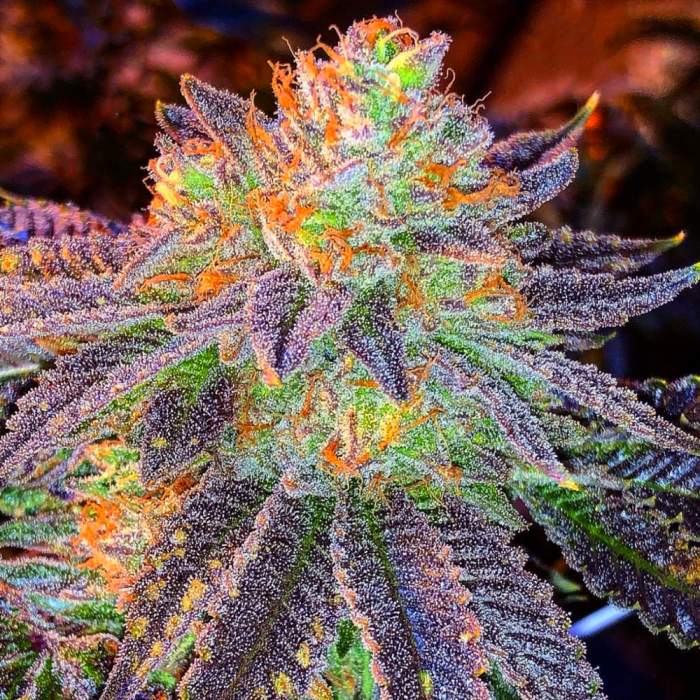
The photoperiod original traces back to a Grape Ape and Grapefruit cross, later refined into the candy-forward profile that took an Emerald Cup in 2016. That lineage is where the flavor comes from: sweet berry and tropical candy up front, with mango and grape sitting underneath, all resting on an earthy base that keeps it from tasting one-dimensional. The autoflower version was built to carry that same terpene signature into a Ruderalis-crossed plant that finishes on its own clock instead of waiting on a 12/12 light change.
That’s the appeal of Zkittlez autoflower seeds specifically: you get the candy-jar flavor people already look for when they search zkittlez strain, but in a plant that’s done in nine to ten weeks total, seed to harvest, with no light-cycle flip required.
Structure: Thin Internodes, Airy Canopy
Zkittlez plants stretch with long, relatively thin internodes, which sounds like a downside until you’re dealing with a humid grow room. That open spacing between nodes lets air move through the canopy, which cuts down on the bud rot risk that denser strains face late in flower. It’s one reason this cross does well in climates with muggy summers or growers running tight indoor spaces without much airflow to spare.
Expect a finished height in the 100 to 150 cm range indoors — tall enough to reward light training, short enough to stay manageable under a standard tent light.
Flowering Timeline and Yield
Because it’s an autoflower, there’s no vegetative period to plan around — the plant moves from seedling to bloom to harvest on an internal timer regardless of your light schedule. Total time from seed to harvest runs roughly nine to ten weeks. Outdoor growers can expect around 400 g per plant when the season cooperates, with THC testing near 25%, on the higher end for an autoflower cross.
Indoors, yield tracks closely with how much light training you get in early — since there’s no extended veg to recover in, every week counts more than it would on a photoperiod plant.
Indoor vs. Outdoor: Which Suits Zkittlez Autoflower Better?
Indoor growers get more control over humidity and temperature, which matters given the strain’s sensitivity to mold in tight, damp conditions — ironic given how open the canopy is, but dense candy-terpene buds still trap moisture at the core. Outdoor growers benefit from natural airflow and full-spectrum sun, but should still watch weather forecasts around week 8 to 9, when the buds are heaviest and most vulnerable to a late-season rain.
Training Without Losing the Clock
Autoflowers don’t get a redo on a stressed veg period the way photoperiod plants do — there’s no long flowering stretch left to recover in. That makes early, light training the move: low-stress training (LST) in weeks two and three, tying down the main stem gently to encourage lateral branching, works far better than topping late in the cycle. Save aggressive defoliation for early pre-flower at most; stripping fan leaves during peak bloom on an autoflower can stall growth it doesn’t have time to make back.
Feeding and Common Mistakes
Overfeeding is the single most common mistake with this strain’s autoflower seeds. Autoflowers generally need lighter nutrient concentrations than photoperiod plants of similar size — a full-strength feed schedule built for a bigger, longer-lived plant will burn roots on something moving this fast. Start at half-strength and adjust up only if deficiency symptoms show. It’s also worth resisting the urge to judge yield too early: the stretch phase can look thin and unimpressive before the plant fills out heavily once flowering kicks in around week four or five.
Flavor and Effect Profile of the Finished Flower
Grown well, the finished flower keeps the candy-jar reputation intact — sweet berry and tropical fruit on the inhale, a grape-forward exhale, and an earthy note underneath that keeps it from tasting like straight candy. It’s a hybrid-leaning effect profile that tends toward relaxed and social rather than heavily sedating, which is part of why the genetics show up so often across breeder catalogs under variations like blue zkittlez, purple zkittlez, and gorilla zkittlez crosses.
Frequently Asked Questions
How long do Zkittlez autoflower seeds take from germination to harvest?
Roughly nine to ten weeks total. Autoflowers run on an internal timer rather than a light-schedule trigger, so there’s no separate veg-to-flower switch to manage.
Do Zkittlez autoflower seeds need special light schedules?
No — that’s the point of an autoflower. An 18/6 or 20/4 schedule can run the entire grow without ever switching to 12/12, since flowering is triggered by age, not light change.
Is the Zkittlez strain good for beginner growers?
Yes, with one caveat: because the plant stretches on long internodes, new growers should start light training early to keep the canopy even and avoid a tall, leggy structure in a limited grow space.
Ready to grow the real thing? Buy Zkittlez autoflower seeds at The Seed Pharm with discreet shipping across Canada and the USA.
Ready to Grow?
Shop premium Autoflower Seeds with germination guarantee and free shipping.
Shop Autoflower Seeds →