
Feb
Beginner's Guide to Growing Marijuana, How To Grow Marijuana Seeds
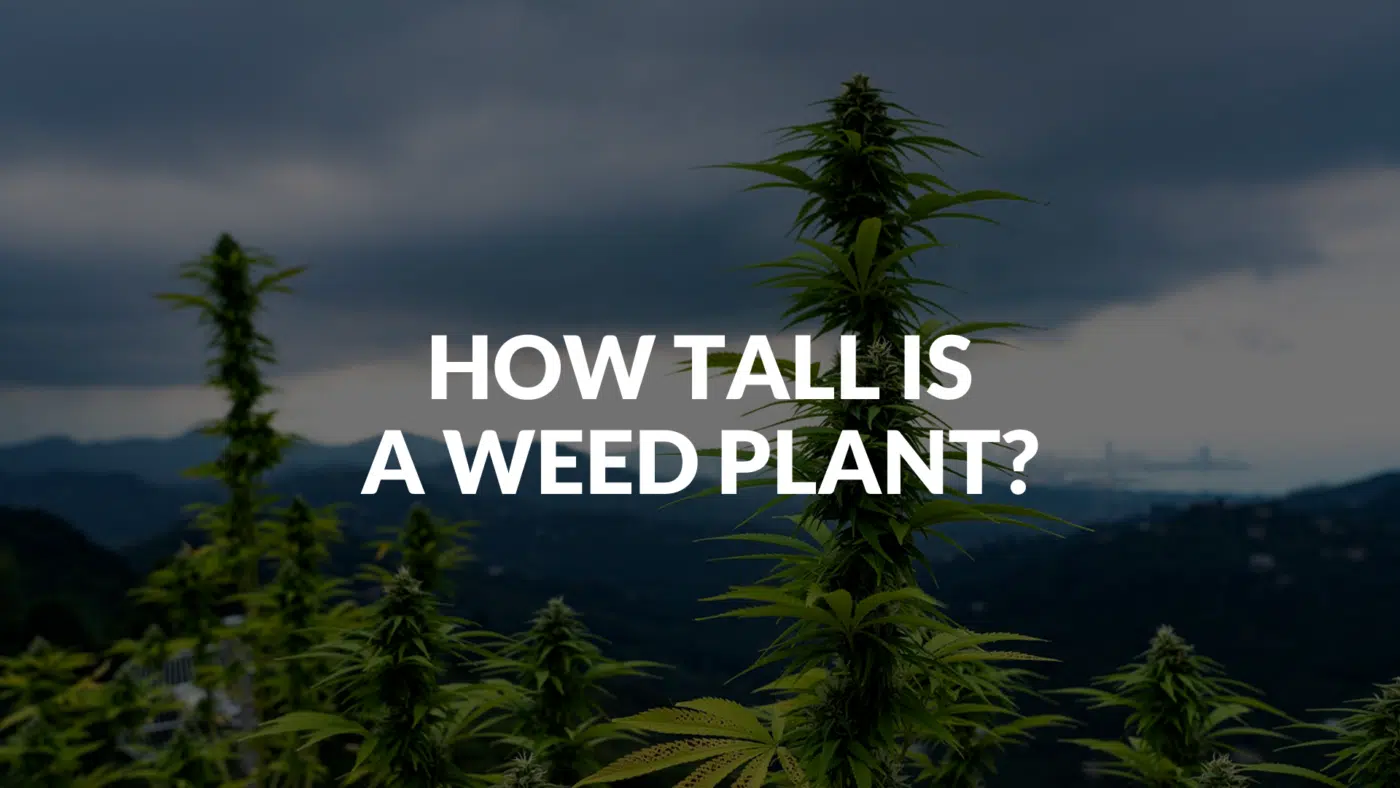
How Tall Is a Weed Plant?
Before buying cannabis seeds, it is a good idea to find out as much as you possibly can about the strain you are planning to buy. This allows you to better prepare for the needs of your cannabis plants and avoid potential issues later on.
One critical piece of information that is often overlooked by cannabis cultivators, especially those planning on growing cannabis indoors is the height of a marijuana strain once it fully matures. Height isn’t much of an issue if you are planning to grow your plants outdoors. But if you are planning to grow weed plants indoors, you might be faced with a problem with the lack of vertical space in your grow room.
How Tall Will Your Cannabis Plants Grow?
On average, cannabis plants grow around one and a half feet tall. There are some instances where a plant can grow as high as 34 feet. Typically, it will take between eight weeks and six months before your plants mature fully and become ready for harvest. As you can see, there is a huge variance in the possible final height among weed plants. This is because there are a few factors that influence their height.
Factors That Influence the Height of a Cannabis Plant
Genetics, location, lighting, training techniques, and growth stages are a few factors that help determine how tall your cannabis plant will end up.
- Genetics
Generally, Indica strains don’t grow tall. Instead, they grow bushy. This is why they are best planted in an indoor grow room where vertical space may be limited. Their small height makes them perfect for growers who may prefer to cultivate cannabis plants in a closet or other similar area. Indicas can usually grow between two and four feet. However, if you allow them to grow on their own, they can reach a height of as tall as 12 feet.
Sativas, in contrast, are predisposed to grow tall and skinny. This makes them perfect for growers who wish to plant outdoors. In fact, most Sativa strains do well in an outdoor setting where they can get as much heat and humidity as they need. Generally, these ladies can grow as high as 20 feet.
Autoflower seeds grow squat due to their Ruderalis genes. Although these cannabis seeds mature fast, they won’t grow as tall as Indicas or Sativas. The height of autoflowers can range between 1.5 to 3.5 feet. You can grow these strains indoors or outdoors.
- Growing indoors vs. outdoors
Where you plant your cannabis seeds has an impact on their height. When you plant indoors, you can control practically every facet, including the height of your crops. This is particularly true if you have limited vertical space in your grow room.
Take note that limited indoor space does not mean that you will get smaller yields. With the use of the appropriate training techniques, you can maximize your space and ensure that you get good yields come harvest time.
But how tall do cannabis plants get when planted indoors? In an indoor grow space, a cannabis plant will grow as tall as the available space. But more often than not, cultivators try to keep their crops at around six feet tall. Instead of allowing their plants to grow tall, they train them to grow horizontally.
Grown outdoors without space restrictions and with adequate room for the growth of roots and ample sunlight, cannabis plants can reach their maximum genetic potential in terms of height. If you are planning on growing marijuana outdoors, you can control the root space, amount of light and available space to limit the height of your marijuana plant.
- Training techniques
Some cultivators deliberately keep their marijuana plants shorter by using various training techniques. Aside from keeping marijuana plants shorter, these training techniques are used to ensure higher yields. Essentially, these training techniques stress or even damage the plants. As a result, a marijuana plant will spend its energies on repairing itself and bud production instead of using its resources toward growth.
Here is a brief look at the most common and effective ways of training cannabis plants.
Low-stress training
Low-stress training (LST) is a training technique where the canopy of a cannabis plant is flattened. This allows the plant to get more light, especially in its lower plants. Additionally, LST helps increase yield.
Screen of Green
Like LST, the screen of green or ScrOG is a cannabis plant training technique that is used to encourage a plant to grow horizontally instead of vertically. With this training technique, you will need a trellis, net, or screen to encourage the growth of a broad canopy. And the broader the canopy, the more light gets to the lower bud sites. This, in turn, translates to higher yields.
Topping
Topping is a pruning method that is often used before cannabis plants enter the flowering stage. With this method, you will need to cut the tips of the branches to prevent them from growing taller. Instead, you want your plants to produce more buds. This training technique is often used on Sativa strains because these weed plants grow taller than Indicas.
- Growth Stage of Marijuana Plants
Although there are four marijuana growth stages, you can divide these into two main parts: the vegetative stage and the flowering stage. During the vegetative stage, your cannabis plants focus their energies on growth. Once they enter the flowering stage, they shift their energies toward developing buds.
If you are new to growing marijuana, one important fact that you need to know is that the longer time a cannabis plant spends in the vegetative stage, the taller it gets. On the other hand, the amount of time spent by a plant in the flowering stage depends heavily on two crucial factors – its genetics and its environment.
If you want to maximize your yield and increase the growth of your plants, seasoned growers suggest initiating the transition from the vegetative stage to the flowering stage only when your female plants have reached half of your desired height.
- Lighting
Lighting is a crucial element of success in growing marijuana. But for indoor growers, finding the right intensity and power becomes even more important. If you are using underpowered grow lamps, your indoor plants won’t reach their full potential. And with stunted growth comes the possibility of your female plants producing a lower yield.
What’s the Ideal Height for Marijuana Plants?
When it comes to growing marijuana, especially female plants, taller is not always better. At the end of the day, you want each weed plant to provide you with the highest amount of yield. This simply means that there is no ideal or optimal height for marijuana plants.
Allowing your plants to grow too tall doesn’t add benefits. In fact, being too tall can be detrimental. If you look at a female plant, you will notice that the fattest buds are concentrated at the top. The further down you go, the buds become noticeably smaller until the point that the weight of the buds is negligible.
Without the appropriate training technique, you won’t be able to maximize the bud production of each weed plant. In fact, you can end up wasting your resources, especially your time, effort, and electricity.
When it comes to plant height, there are a few critical things that you need to remember. First, finding the optimal height for your crops involves some trial and error. Ideally, the height of your cannabis plants should be the same as the length of its main colas.
Second, if you want to get more out of your weed plants, you need to increase not only their height but as well as the number of bud sites. This is best done during the vegetative stage.
Third, when training your plants, it is best to keep them flat and wide. You should allow them to take as much space as they possibly can under the grow lights. You should also consider defoliation to expose more bud sights to your grow light.
Finally, make it a habit to inspect your crops after you harvest. This will give you an opportunity to see what you did right and wrong during this planting cycle.
